Thursday, February 20 | Post-Acute Care, Thought Leadership


Understanding and Preventing Claim Denials: A Strategic Approach
By Mykel Banks, Director, Acute Services
Claim denials are a persistent challenge for inpatient facilities, leading to financial strain, administrative burdens, and potential disruptions in patient care. Effective claim denial management starts with understanding why claims are denied, so facilities can minimize risk, maximize reimbursement, and implement proactive prevention strategies.
Top Reasons for Inpatient Claim Denials
- Medical Necessity & Documentation Gaps
- Payers often deny claims due to insufficient documentation supporting medical necessity. Common issues include:
- Lack of proper utilization review and initial screening tools
- Incorrect patient status (inpatient vs. observation)
- Lack of detailed physician notes justifying inpatient admission
- Missing physician adviser peer to peer reviews
- No appeal completed for authorization denials
- DRG Coding Downgrades
- Lack of clinical validation in complications or comorbidities (CC or MCC)
- Improper coding and procedure codes can trigger denials.
- Lack of response to record submission request
- Technical & Administrative Errors
- Missing or late submission of prior authorization requests
- Clinical Information not provided
- Data entry mistakes in patient demographics or insurance details
- Readmissions Denials
- Commercial, Medicare and Medicaid managed products misinterpretation of readmission policy and procedures
- Medicare and Commercial Payers Regularly Update Policies
- This leads to inconsistent compliance if facilities do not stay current. Common pitfalls include:
- 2 Midnight Rule
- Short Stay policies inconsistent with Medicare Regulations
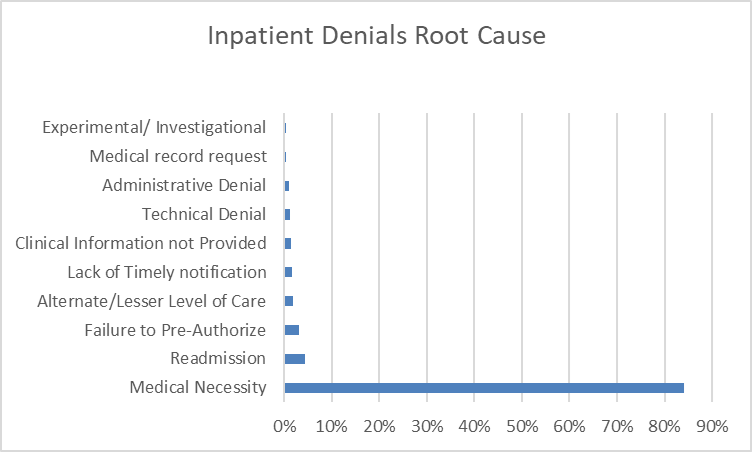
As a leading denials management provider, McBee has reviewed hundreds of thousands of appeals and categorized the most common denial reasons. McBee classifies our appeals into “Inpatient” and “DRG Downgrade” categories to better identify root causes and provide meaningful feedback to our clients. The root causes of our Inpatient denials are 84% medical necessity related, 12% technical issues and 4 % readmissions. The breakdown of our most common inpatient denial reasons are illustrated in the graph below.
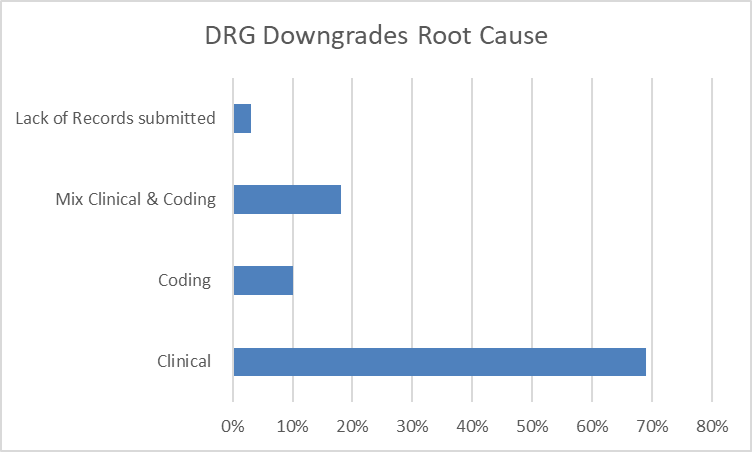
DRG-challenged denials are 69% clinical validation related. An insurance company uses their own references or guidance to suggest a diagnosis code was misused by the treating physician. 10% of DRG downgrades we have encountered are solely coding related and 3% are lack of records submitted for audit purposes. The breakdown of our most common DRG Downgrade denial reasons are illustrated in the graph below.
Proactive Strategies to Reduce Claim Denials
The key to reducing claim denials lies in implementing strategies to address and prevent future denials.
- Enhance Documentation Practices
- Train physicians and staff on payer-specific requirements
- Implement real-time audits to catch errors before submission
- Use templates and checklists for consistent documentation
- Perform quality analysis on utilization reviews and clinicals submitted
- Strengthen Coding & Billing Accuracy
- Invest in ongoing ICD-10 and IRF PPS training for coding staff and clinical documentation specialist
- Conduct regular audits to identify and correct trends in coding and clinical validations
- Add coding and CDI queries to the permanent record to ensure appropriate verifications were used in coding
- Improve Prior Authorization & Admission Processes
- Establish standardized workflows for obtaining payer approvals
- Ensure pre-admission teams collect and document medical necessity criteria upfront
- Leverage case management teams to support admission justification
- Peer to peer winning strategies
- Appeal authorization denials
- Monitor Denials & Implement a Response Plan
- Track and analyze denial trends to pinpoint problem areas
- Develop a denial appeal strategy, ensuring timely and well-supported responses
- Work closely with legal teams and payer representatives to resolve complex cases and review your payer contracts to ensure they are following guidelines
Understanding payer patterns and processes is essential for effective denials management. At McBee, we follow best practices to stay ahead of trends and tackle the root causes of denials for impactful results. Our approach includes:
- Industry-Leading Reporting: Stay informed on denial rates and dollar figures
- Timely Appeal Submission: Ensure all appeals are submitted promptly
- Effective Communication: Foster consistent communication with payers
- Follow-Up on Appeals: Maintain regular follow-up on all submitted appeals
- Collaboration with Hospitals: Inform healthcare providers of changes to prevent future denials
- Comprehensive Tracking: Monitor progress of denials by reason, payer, facility, and other key factors
- Root Cause Analysis: Investigate and address the underlying causes of denials
- Advanced Analytics & Technology: Leverage AI and automation to enhance our denials management process
Conclusion
Preventing inpatient claim denials requires a multifaceted approach, blending clinical expertise, coding accuracy, and administrative efficiency. By proactively addressing documentation, coding, and compliance gaps, inpatient facilities can safeguard reimbursement, reduce administrative burdens, and maintain financial stability.
Meet the Author

Mykel
Banks
· Director, Acute Services
Communities
Solutions and Services
From the CareThreads Blog

Target Denials Before They Happen: The Role of AI in Revenue Cycle Management
Tuesday, October 20 | Post-Acute Care,Revenue Cycle/Billing,Thought Leadership
Denials have historically been treated as a billing problem. A claim is denied. The billing team investigates. Someone tracks down documentation, contacts a payer, corrects the issue, resubmits the claim and waits. If the claim is denied again, the cycle starts over. But here’s the thing: once a denial reaches billing, the work is no longer about preventing the issue. It is about recovering from it.
Read the blog
A New National Benchmark for Personal Care Is Beginning to Take Shape
Monday, October 19 | Post-Acute Care,Thought Leadership
A potentially important shift in personal care took effect on July 1, 2026. Under the Centers for Medicare & Medicaid Services (CMS) Medicaid Access Rule, states were required to begin publicly reporting standardized fee-for-service payment information for several home- and community-based services, including personal care, home health aide, homemaker and habilitation services. At first glance, this may look like another technical Medicaid reporting requirement. Its longer-term significance could be much greater.
Read the blog
The Hidden Gaps Driving Audit Risk in Post-Acute Care
Wednesday, October 07 | Post-Acute Care,Thought Leadership
Organizations can no longer afford to approach audit readiness as the responsibility of one department. It requires a connected strategy that spans the entire revenue cycle and helps identify risk before it becomes an audit finding.
Read the blog